

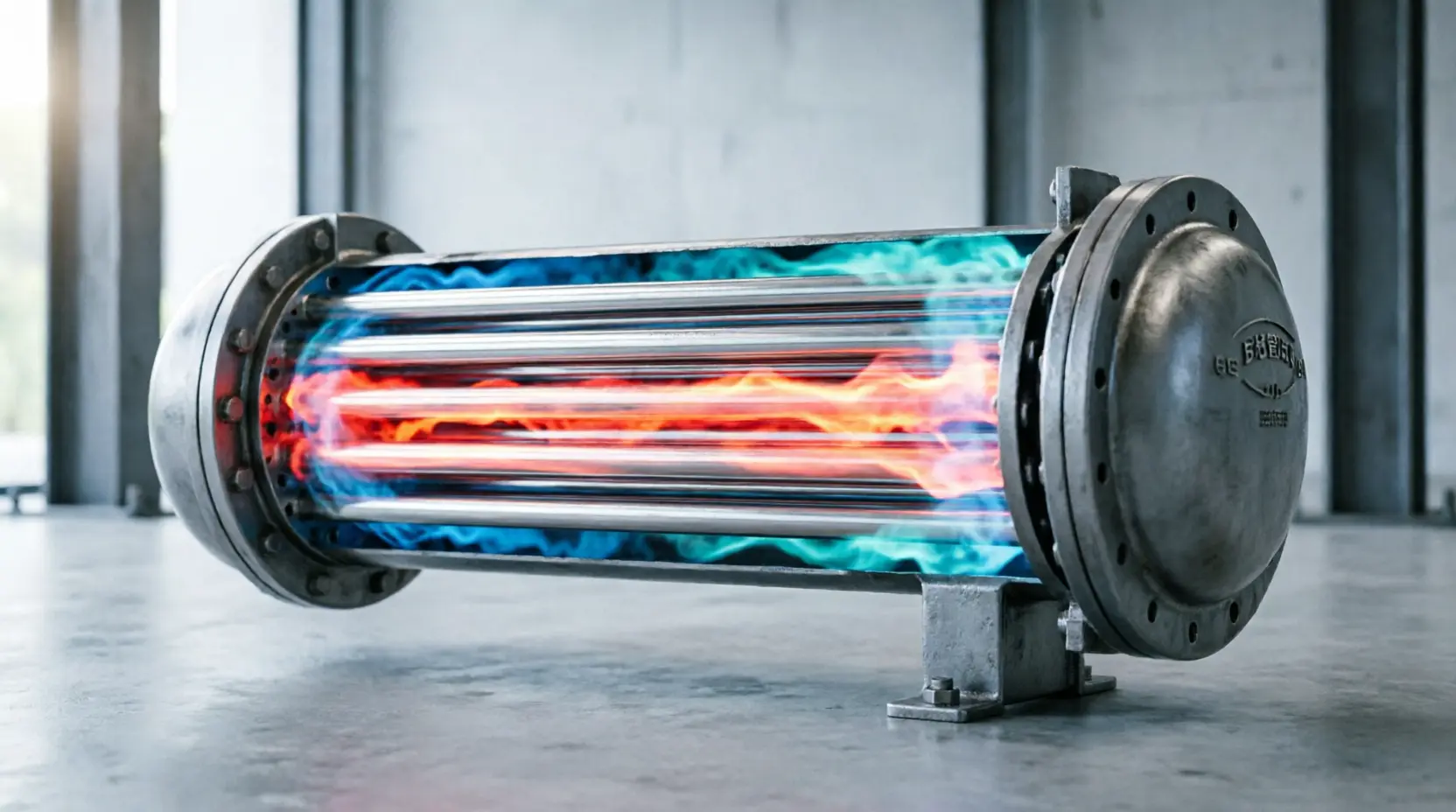
No matter what type of industry it is whether it’s a refinery or a district cooling plant – the first and foremost issue which should be solved efficiently by any industrial enterprise is the issue of transfer of heat from one place where it’s not required to another place where it may be used, rejected, or recovered. This is where a heat exchanger comes into play. The process of heat exchange lies at the heart of most industrial and commercial operations – be it the cooling of equipment, condensation of steam, heat recovery or temperature control.
Heat exchangers are used in the oil and gas sector, petrochemical industry, power generation, HVAC, food and beverages industry, marine sector, pharmaceuticals, and district cooling, among others. In this guide, we’ll take a closer look at what a heat exchanger actually is, how does it work, what types exist and in what applications, and how to pick the most suitable solution – with special emphasis put on the use of these devices in UAE industries. In case you are evaluating equipment for your enterprise, you can learn more about heat exchanger and HRV systems in UAE. If you’re evaluating equipment for your own facility, you can also explore heat exchanger and HRV solutions in the UAE directly.
What Is a Heat Exchanger?
- The heat exchanger is the equipment designed to transfer heat between fluids but not necessary to mix them. The hot fluid enters the heat exchanger, while the cold fluid enters it; and the equipment transfers the thermal energy between these two streams through the separating surface (usually metal tube or plate), so that the fluids leave the equipment with another temperature.
There are some basic principles of how the heat exchanger works:
- Hot and cold fluid streams: Any heat exchanger works with two fluid streams having different initial temperatures. It can be gas, liquid or both (in case of condensers and evaporators).
- Heat transfer through the separating surface:
- Generally in the industrial applications, the fluids do not touch each other. The heat passes through the solid separator – tube wall or plate – transferring thermal energy between the fluids without mixing them.
- Indirect and direct heat transfer: The indirect (surface) heat exchangers separate the fluids completely, while the direct contact ones do not – the fluids touch each other.
Why heat exchangers improve energy efficiency: By recovering heat that would otherwise be wasted — such as capturing heat from a hot exhaust stream to preheat incoming fluid — heat exchangers cut fuel and electricity consumption significantly across a plant’s operation.
How Does a Heat Exchanger Work?
Basic Heat Transfer Process
At its simplest, a heat exchanger follows four steps:
- Hot fluid enters the heat exchanger through its designated inlet.
- Cold fluid enters through a separate passage, kept apart from the hot stream by the exchanger’s internal structure.
- Heat moves from the hot fluid to the cold fluid, driven by the temperature difference between them, through the separating wall.
- The fluids exit at different temperatures than they entered — the hot fluid cooler, the cold fluid warmer — with the two streams still unmixed (in indirect designs).
Main Heat Transfer Methods
Three physical mechanisms govern how heat actually moves through the equipment:
- Conduction — heat moves through the solid wall or plate separating the two fluids.
- Convection — heat is carried into and away from that wall by the moving fluid on each side.
- Radiation — this plays a role in very high-temperature equipment, but it’s generally a minor factor in conventional fluid-to-fluid industrial heat exchangers, where conduction and convection dominate.
Parallel Flow vs. Counter flow vs. Cross flow
The direction the two fluids travel relative to each other has a major effect on performance:
- Parallel flow: Both fluids enter at the same end and travel in the same direction. This gives a rapid initial temperature change but a smaller overall temperature difference by the time the fluids exit — for example, hot exhaust gas and cooling water both entering side by side and cooling/warming together as they move down the unit.
- Counter flow: The fluids enter from opposite ends and flow in opposite directions. This arrangement generally achieves the highest possible heat transfer efficiency for a given size, since a temperature difference is maintained along the entire length of the exchanger.
Cross flow: The fluids move perpendicular to each other, as seen in many air-cooled and finned designs, where air passes across tubes carrying a hot process fluid. This layout is common where one fluid is a gas moving through a duct or open bank of tubes.
Types of Heat Exchangers
- Shell and Tube Heat Exchanger
Structure: A group of tubes is fitted into a shell, which is a large cylinder. One fluid moves through the tubes, and another fluid moves around the tubes, within the shell.
Principle of Operation: Heat exchange takes place between the tube walls when the shell-side fluid flows across the outer surfaces of the tubes and the tube-side fluid moves through the inner surfaces of the tubes.
Pros: Operates under high pressure and temperatures, can be scaled up to very large capacities, and is easy to clean and maintain if proper access is provided.
Uses: Applications include oil and gas industry, chemical processes, power plants, HVAC and refineries, wherever large flow rates of fluids have to be handled and high-pressure heat transfer is required.
Cons: Heavier and bulkier compared to plate type heat exchanger having the same capacity.
2.Plate Heat Exchanger
Design: A set of thin metal plates, which are wavy in shape and stacked together, allowing both liquids to flow in alternate channels between plates.
Working principle: The heat is transferred through the thin wall of plates from one channel to another.
Pros: Very small and efficient, easily expanded with plates, and easily dismantled for cleaning purposes.
Cons: If the gasket type heat exchanger is used, then there will be certain pressure and temperature limitations, and it is not suitable for large sized particles.
Applications: HVAC systems, food and beverage processing, district cooling, and other applications where space is limited and fluids are relatively clean. High-efficiency plate heat recovery units are a common choice for large-scale commercial and industrial ventilation projects for exactly this reason.
3. Air Cooled Heat Exchanger
Where instead of another liquid, air is used to carry out the heat transfer operation in this kind of exchanger. In this case, a flow of air is either drawn or pushed across the fins of the tubes containing the hot process fluid, and thus transferring the heat energy to the surrounding air.
Uses: Places such as oil and gas production facilities, petrochemical industries, industrial cooling systems, and places of electricity production where water is scarce or where water is not desired to be used, this type of exchanger finds more use in.
4. Double Pipe Heat Exchanger
The two pipes have one pipe within another where one fluid flows within the small pipe while the other flows in between the small pipe and the big pipe.5. Finned-Tube Heat Exchanger
Fins are added to the outside (or sometimes inside) of tubes to significantly increase the surface area available for heat transfer. This is especially useful when one of the fluids is a gas, such as air, since gases generally transfer heat less efficiently than liquids and benefit from the extra contact area the fins provide.
1. Spiral Heat Exchanger
This is made up of two sheets that have been coiled in a way to create spiral-shaped flow passages in which the hot fluid and the cold one pass in alternate spiral paths. This heat exchanger is suitable for fluids with suspended solids or those that are likely to foul as it is compact and self cleaning.
2. Condenser
Condensers are special heat exchangers meant for turning a hot vapour into a liquid form. This process forms an integral part of the refrigeration process and also in the generation of electricity through steam engines.
3. Evaporator
As its name suggests, evaporator performs the opposite function of a condenser. Here, heat is supplied to a liquid in order to turn it into vapour. Evaporators play a key role in the refrigeration process as well as air-conditioning processes.
Classification of Heat Exchangers
Based on Heat Transfer
- Direct-contact heat exchangers — the two fluids physically mix as heat transfers between them.
- Indirect-contact heat exchangers — the fluids are kept separate by a solid wall, which is the standard approach for most industrial equipment.
Based on Flow Direction
- Parallel flow
- Counter flow
- Cross flow
Based on Construction
- Shell and tube
- Plate
- Double pipe
- Spiral
- Finned tube
Where Are Heat Exchangers Used?
Heat exchangers are essential across a wide range of industries:
- Oil and gas — cooling and heating process streams throughout extraction, refining, and transport.
- Petrochemical — managing heat loads in reactors, distillation columns, and downstream processing.
- Chemical manufacturing — controlling reaction temperatures and recovering process heat.
- HVAC and refrigeration — transferring heat between refrigerant and air or water in cooling and heating systems.
- Food and beverage — pasteurization, sterilization, and temperature-controlled processing.
- Power generation — condensing steam and recovering waste heat in power cycles.
- Marine industry — engine cooling and on board climate control systems.
- Pharmaceutical manufacturing — precise temperature control for sensitive production processes.
- District cooling — transferring heat between chilled water networks and building systems.
- Desalination and water treatment — recovering heat during evaporation and distillation stages.
Benefits of Using Heat Exchangers
- Energy savings through recovering and reusing heat that would otherwise be lost.
- Improved process efficiency by maintaining tighter, more consistent temperature control.
- Reduced operating costs driven by lower fuel and electricity consumption.
- Heat recovery from exhaust streams, condensate, and other by products.
- Temperature control critical to product quality and process safety.
- Compact equipment options, particularly with plate and spiral designs, for space-constrained facilities.
- Reduced cooling requirements on downstream equipment when heat is captured earlier in a process.
- Improved overall system performance across the connected equipment a heat exchanger supports.
How to Choose the Right Heat Exchanger
Selecting the right unit comes down to matching the equipment to your process conditions and constraints:
- Type of fluids — chemical compatibility, viscosity, and phase (liquid, gas, or vapour).
- Required heat-transfer capacity — the duty the exchanger needs to handle, in line with process demands.
- Operating temperature — both the range and any extremes the equipment must withstand.
- Operating pressure — system pressure ratings the design must safely support.
- Flow rate — the volume of fluid moving through the system per unit time.
- Available space — footprint and layout constraints at the installation site.
- Fluid corrosiveness — material selection to resist chemical attack over the equipment’s service life.
- Fouling potential — how prone the fluids are to depositing scale, sediment, or residue.
- Maintenance requirements — how easily the unit can be inspected, cleaned, and serviced.
- Installation and operating costs — balancing upfront investment against long-term running costs.
Heat Exchanger Maintenance
Common Problems
- Fouling — build up of deposits that reduces heat transfer efficiency.
- Scaling — mineral deposits, particularly in water-based systems.
- Corrosion — chemical degradation of materials over time.
- Leakage — failures at seals, gaskets, or joints.
- Blockage — obstructions restricting fluid flow through tubes or channels.
- Reduced heat-transfer efficiency — the cumulative effect of the issues above.
Maintenance Practices
- Regular inspection of internal and external surfaces.
- Cleaning to remove fouling, scale, and debris.
- Leak testing to catch failures before they escalate.
- Monitoring temperature differences to track performance drift.
- Checking pressure drop as an early indicator of fouling or blockage.
- Replacing damaged components — gaskets, tubes, or plates — before they compromise performance.
Heat Exchangers in UAE Industries
The use of heat exchangers is critical in the operation of industries in Dubai, Abu Dhabi, and Sharjah, where there is a need for thermal efficiency due to the hot conditions in the region that require the management of energy in the form of heat in the processes of industries such as oil and gas, petrochemicals, and manufacturing industries.
Apart from the use of heat exchangers in heavy industries, the commercial HVAC and district cooling systems in the UAE greatly depend on the plate and shell and tube heat exchangers that help in managing the high cooling load caused by the high temperatures in the region.
For facility managers and engineers across the region, working with experienced heat exchanger companies in UAE means access to equipment and service providers who understand these local operating conditions. Whether you’re sourcing a new unit or maintaining existing equipment, established heat exchanger companies in Dubai typically offer a full range of shell-and-tube, plate, and air-cooled solutions suited to both heavy industrial and commercial applications across the region’s heat exchangers UAE market. Providers such as Humidity.ae, a heat exchanger and HRV solutions company based in Dubai, supply and support this full range of systems for homes, offices, and industrial facilities across the UAE.
Heat Exchanger vs. Chiller: What Is the Difference?
Feature | Heat Exchanger | Chiller |
Main function | Transfers heat | Produces chilled water/fluid |
Refrigeration cycle | Usually no | Yes |
Energy transfer | Between fluids | Removes heat using refrigeration |
Common use | Process heating/cooling | HVAC and process cooling |
In short, a heat exchanger moves heat between two existing fluid streams, while a chiller actively generates cold water or fluid through a refrigeration cycle — and chillers themselves typically contain heat exchangers (the condenser and evaporator) as core internal components.
Conclusion
A heat exchanger is, at its core, a straightforward but essential piece of equipment: it moves heat from one fluid to another to keep industrial and commercial systems running efficiently, safely, and at the right temperature. From shell-and-tube units handling heavy industrial loads to compact plate exchangers serving HVAC systems, the right type depends on your fluids, pressures, space, and maintenance capabilities.
Understanding how heat transfer occurs, the major types available, and where each one fits best puts you in a strong position to specify or maintain the right equipment for your facility. If you’re planning a new installation or need to upgrade existing systems, explore our full range of heat exchanger and HRV solutions or get in touch with our team to review your specific process requirements and get the right solution in place.
What is a heat exchanger?
A heat exchanger is a device used to exchange heat from one fluid to another without mixing of two fluids, with the help of separating surface like tube wall or plate.
How does the heat exchanger function?
Hot fluid and cold fluid are passed through two separate passages in the heat exchanger. Heat transfer occurs from hot fluid through separating wall into cold fluid by conduction and convection processes, so that two fluids leave the heat exchanger at different temperature from their inlet temperature.
Classification of heat exchangers
Various classifications of heat exchangers are shell & tube, plate, air cooled, double pipe, finned tube, spiral, condensers, evaporators etc., depending upon pressure, fluid and space requirements.
What is a shell and tube heat exchanger?
A heat exchanger having a number of tubes surrounded by cylindrical shell, in which one fluid is passed through tubes and another fluid is passed through shell.
What is the difference between parallel flow and counter flow?
In parallel flow, both fluids move in the same direction and enter at the same end, while in counter flow they move in opposite directions from opposite ends — counter flow generally achieves better overall heat transfer efficiency.